
Tag Heuer Formula 1 Quartz vs Automatic Comparison
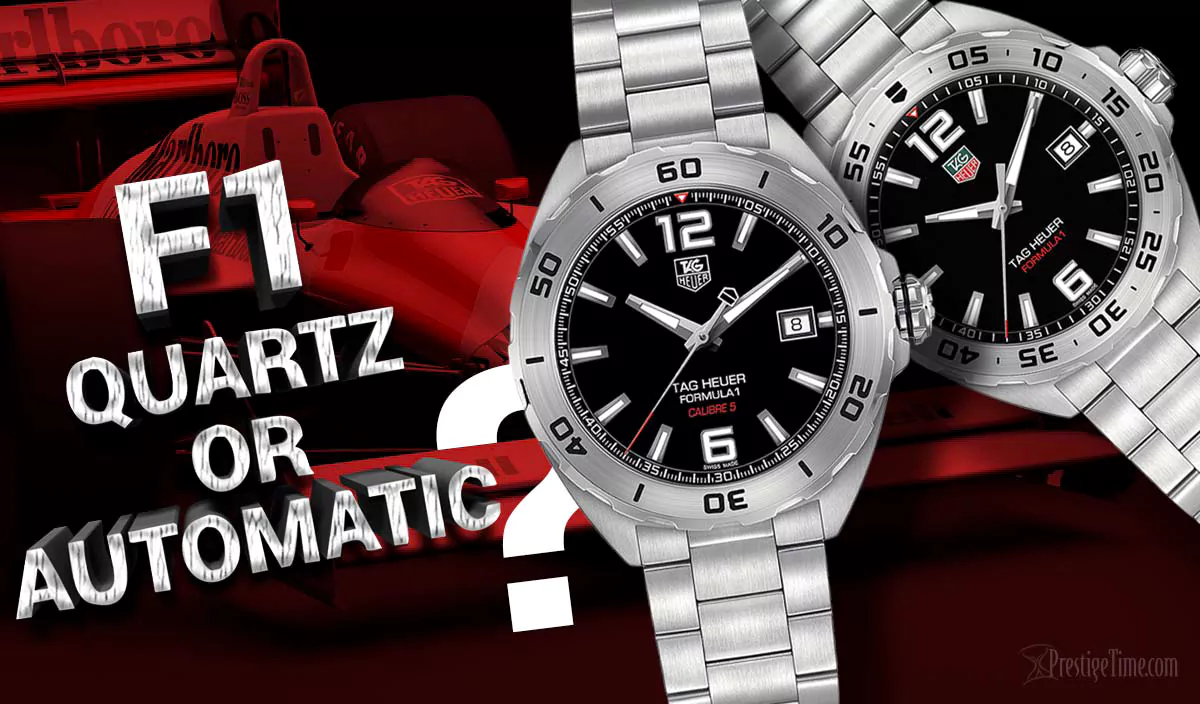
Comprehensive comparative analysis of Tag Heuer Formula 1 Quartz and Automatic models: Case finishes, movement precision, dial details and production tolerances are examined in detail with Saat Detective expertise standards.
Despite all the similarities between the TAG Heuer Formula 1 Quartz and Automatic models, these are two very different watches. The mechanical structure used to tell the time is as different as night and day. Yes, the most noticeable differences are on the outside, and there are only a few. What really sets these two apart is what happens "under the hood." So the XXX question still remains:
TAG Heuer Formula 1 Quartz VS Automatic. Which is better?
In this detailed comparison, we will compare two of the best-selling TAG Heuer Formula 1 watches. One is a quartz model and the other is an automatic/self-winding model.
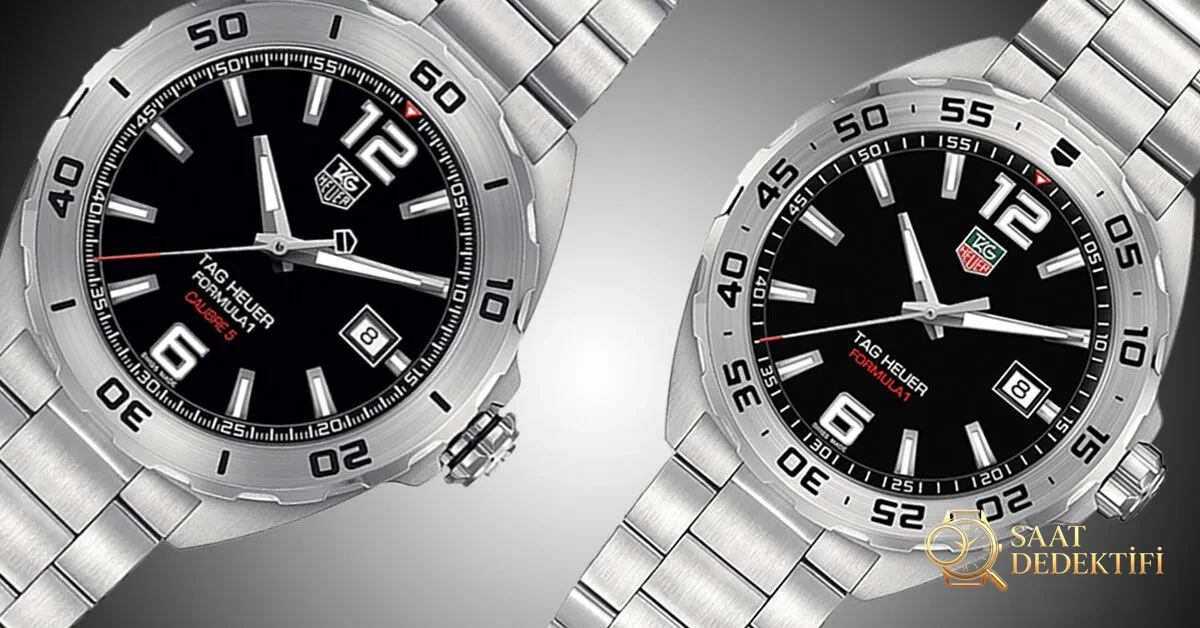
TAG Heuer Formula 1 Quartz 41 mm TAG Heuer Formula 1 Automatic 41 mm
Before we get into what sets these two watches apart, let's start with what makes them similar. First of all, the overall appearance of both watches is almost identical. They both have the exact same sporty look; Same case size, same hour and minute hands, same hour markers, and same stainless steel bracelet. In terms of additional functions, they both have a date window at 3 o'clock. Both are made from the same material and have 200m / 660ft water resistance. As for the inside of the watch, the difference is in the caliber, namely the mechanism of the watch and the power supply.
Let's first explain the differences between the two types of mechanisms.
Quartz Mechanism
A quartz watch uses a quartz mechanism powered by a watch battery and a quartz crystal. The battery sends an electric current to the quartz crystal, which creates a vibration, or as watchmakers call it, an oscillation. Quartz is a high-frequency crystal and vibrates 32,768 times per second, providing greater sensitivity.
Automatic Mechanism
The automatic mechanism is completely mechanical and does not require any batteries to run the watch. An automatic movement, also called a self-winding movement, is usually wound through the crown when first used, and then is "charged" again, thanks to a rotor, with the kinetic energy generated as you wear the watch.
These are big differences in terms of the internal organs of the watches and as you can see they are quite different on the inside. Many watch enthusiasts prefer a mechanical movement, such as an automatic/self-winding watch; because it has fascinating micro mechanics that add a mysterious value to the watch. In most watches, they can look inside through the transparent case and admire how all the parts move in harmony. In fact, this is one of the reasons why many people start collecting watches.
They differ in appearance in some of the finer design details.
7 Differences Between TAG Heuer Formula 1 Quartz and F1 Automatic
Logo: In Formula 1 Quartz, the logo is green and red, TAG Heuer's brand colors. In the Formula 1 Automatic, the TAG Heuer logo is white. Crown: The crown of the TAG F1 Automatic has an indented line that is not seen on the crown of the TAG F1 Quartz. Bezel: The bezel of the TAG F1 Quartz has more numbers than the bezel of the automatic model. Second Track: You see split-second intervals in the seconds track of Formula 1 Automatic; But you won't see this on the quartz model, which only shows standard seconds and no split-seconds. Dial: On the TAG Heuer Formula 1 Automatic, just below the hour and minute hands, slightly above 6 o'clock, it says "TAG Heuer Formula 1" in white and "Caliber 5" in red. Formula 1 Quartz just says "TAG Heuer" in white and "Formula 1" in red right below it. Date Window: The TAG F1 Quartz's date window uses a larger, easier-to-read font than the date of the F1 automatic/self-winding model. Hour and Minute Hand: The difference between the hour and minute hands is very subtle. The hour and minute hands of the TAG Heuer Quartz and Automatic are exactly the same. The difference is in the second hand. Although both models feature a red-tipped seconds hand, only the TAG Heuer Formula 1 Automatic has the TAG emblem on the other end of the seconds hand.
Remember: Despite these 7 differences in appearance, these are two very different watches. One is an automatic mechanical watch with a mechanical movement and the other has a battery-powered quartz movement.
TAG F1 Quartz 41 mm Review TAG F1 Automatic 41 mm Review

Saat Dedektifi Expert Score
Model: Tag Heuer Formula · Standart Seri CloneUser Rating
25 people rated · Saat Dedektifi Verified Score
Rate this model:
Conclusion & Detective Verdict
As demonstrated in our technical review of the Tag Heuer Formula model; the optical tolerances of the case, dial typography, and stable operating performance of the movement elevate this model to the pinnacle of its category. With its wrist ergonomics, premium material quality, and micron-level finishing precision, it stands as a flawless choice for collectors.
Frequently Asked Questions (FAQ)
Which mechanism is used in the Tag Heuer Formula model?
In this model, the model's high stability integrated caliber or Swiss-norm Clone movement is used; Deviation tolerance is in the range of 2-5 seconds per day.
What is the case material and stainless steel quality?
Made from solid 904L/316L stainless steel with high corrosion resistance; It exactly reflects the original feeling of weight and texture.
Is there AR coating on the sapphire glass surface?
Yes. There is a colorless double-sided AR coating on the scratch-resistant sapphire crystal glass surface to prevent glare and reflection.
How is the waterproof performance?
With its seal-tested crown system, it is fully resistant to pressure up to 50-100 meters and daily water contact.
Does Saat Dedektifi have expertise assurance?
All technical controls, timegrapher measurements and case tolerances received full marks from Saat Detective expertise standards.