
How much deviation is considered normal in mechanical watches? How to reduce drift?
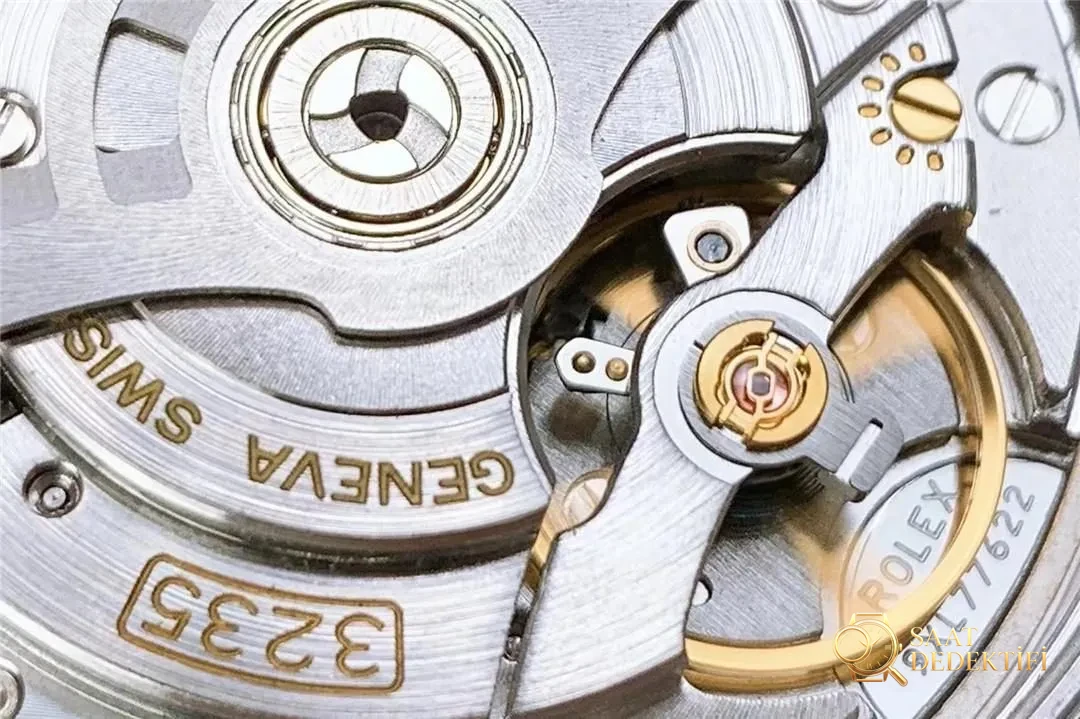
I often get the following questions: How much is the deviation of this mechanism? I have this much deviation, is my watch defective? Today I will briefly talk about mechanical watch deviation. From a principle point of view, deviation is inevitable in mechanical watches. Whether pendulums or springs, they basically measure time by vibrating back and forth. This principle also means that no matter how good and expensive it is, every mechanism will inevitably have deviations due to external environmental effects, and this deviation is much greater than quartz watches, electronic watches and atomic clocks.
Let me briefly talk about the factors that affect the magnitude of deviation in mechanical watches.
Gravity: In daily life, it is not possible for the watch to always remain parallel to the ground, and the balance wheel is a relatively heavy part of the watch system. Therefore, different angles relative to the ground definitely affect the deviation. The solution is the tourbillon invented by Mr. Breguet. However, with the development of today's production techniques, the effect of gravity is at an acceptable level in movements that do not contain a tourbillon. Moreover, the tourbillon requires very high workmanship; The deviation of domestically produced tourbillons is sometimes even greater than movements without tourbillons. Temperature: Expansion with heat and contraction with cold is a primary school science subject. The mechanism is a sensitive device and different temperatures will definitely affect its operation. I do not explain this item further because it is primary school information. Tension of the mainspring box: Mainspring boxes of different tension transfer different amounts of force. The magnitude of the difference also depends on the mainspring material and production technique. Therefore, if the watch slows down due to insufficient winding, you just need to wind it a little more, no need to worry. Magnetic field: The mainspring is a metal piece; If it becomes magnetized, operating problems are inevitable. This is basic middle school physics knowledge, I don't explain much in this article. However, if magnetization is detected, demagnetization can be done; This fixes the problem quickly and is much cheaper in terms of time and cost than sending it in for service. Although antimagnetic technology is available in high-end Swiss movements today, I still recommend that you do not bring mechanical watches close to magnetic fields. Severe blow: If you have an angry temper and like to throw things when you get angry, I would definitely not recommend you to buy a mechanical watch. Because the mechanism is already a sensitive device and the parts inside are very small, it is easily damaged. If your watch suddenly starts to drift abnormally, consider whether you have dropped it recently. Water vapor, dust, etc.: You should not go into environments such as hot water baths, saunas, or spas with any mechanical watch, even if it says "diving a few hundred or a few thousand meters" on it; You can dive or swim with it, but do not wear it in these environments. Because mechanical watches are not resistant to water vapor. When a temperature difference occurs, the moisture in the air condenses; Since this is a secondary school physics subject, I won't go into too much detail. So, waterproofing protects against splashes, but it cannot protect against your carelessness. Be careful of water vapor, which is the killer of mechanical watches; It wears out the mechanism and causes the watch to fail. Dust is easier to explain: After all, in a sensitive device, a single speck of dust can get stuck and even cause the entire clock to stop! Vibration: You can refer to point 5, but small vibrations during daily use will also affect the deviation of the watch to a greater or lesser extent. So don't ask me how much deviation there is; It really depends on your usage pattern.
Putting the above 7 points together, we can easily deduce that: Even the on-device test does not represent your true deviation; It is only used as a reference to see whether the watch is stable or not. Problems such as intermittent stopping cannot be measured with the device, but can only be noticed through daily observation. Careful watch enthusiasts may also notice this: When the watch is placed horizontally on the device, the deviation changes, and when the watch is positioned upside down or upside down, the deviation changes as well (in Swiss movements, this change is very small).
Now let's come to the subject you are most curious about: Where exactly is the difference between Swiss and domestic movements? (First of all, I assume you have read and understood the seven items above.)
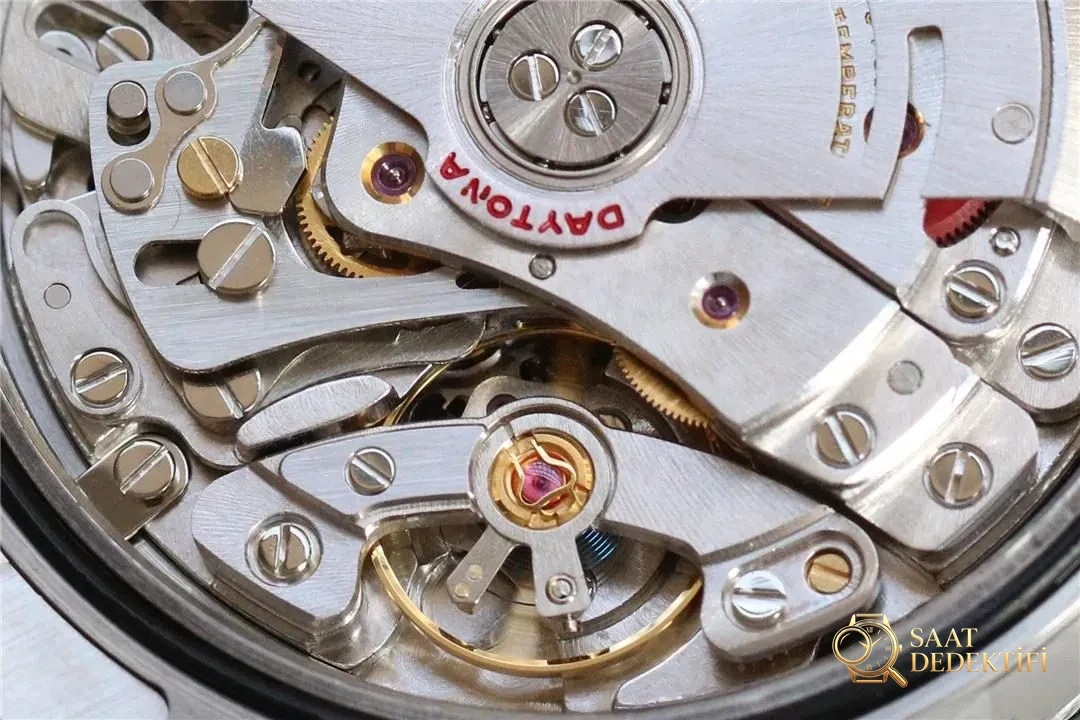
First of all, the level of domestic mechanisms is very different from each other, it would not be right to put them all in the same category. However, their most obvious difference is that the fluctuation in their deviations when affected by the above seven factors is much greater than that of the Swiss mechanisms. Appearance (decorative engraving): The original high-end movements all have patterned engraving; even elegant chamfering and engravings are made on high-end mechanisms. Patterned engraving can also be seen on some local movements, but it remains much rougher compared to Swiss movements.
Functional processing: In Swiss movements, processes such as polishing are applied to the edges of each part; So there is a higher sensitivity. This greatly affects both time accuracy and relates to the lifespan of the mechanism.
Material: Better material directly determines time accuracy and service life. Among these, the difference especially in the mainspring and stone material is not small at all.
Assembly workmanship: The impact of this is actually quite large; Especially the assembly quality of domestic mechanisms is very different from each other.
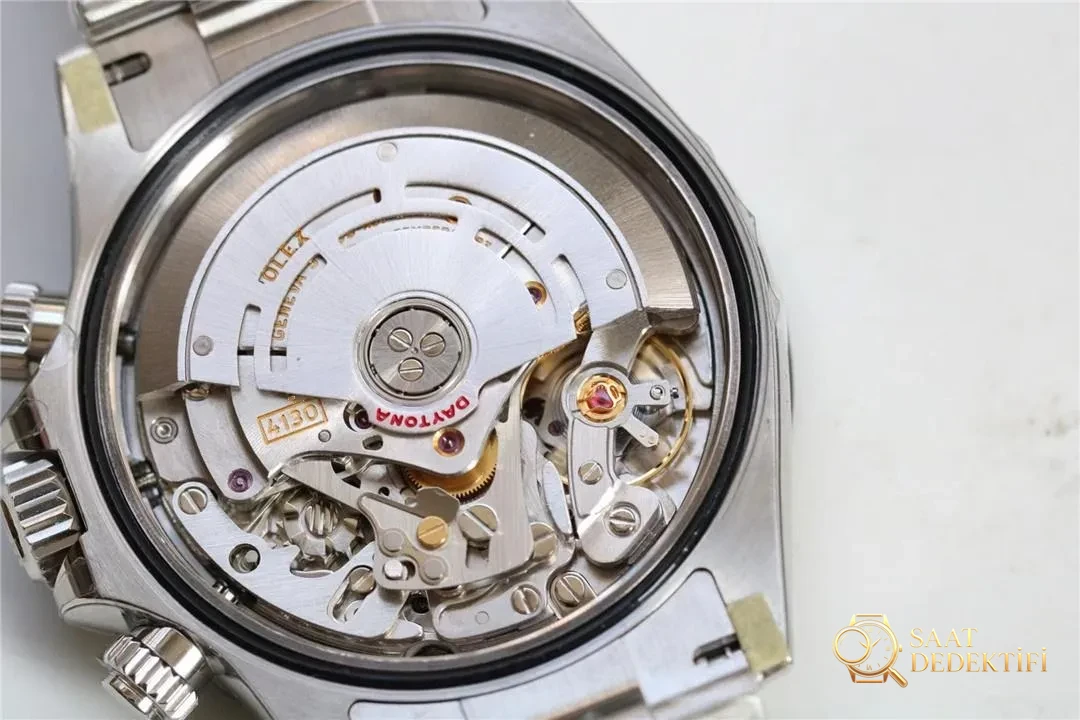
Cost: The main reason for the above 5 differences is again cost. I guess I don't need to explain the price difference between local and Swiss movements in detail; Look at the price difference between toy watches and Swiss watches. This difference is not a little, it is tens or even hundreds of times. Even the best toy watch movements, the ETA series and the domestic 4130, have an entry-level price within the range of Swiss movements.
Finally, let's talk about the clock drift range.
National standard: ±55 seconds/24 hours.
Japanese standard: ±45 seconds/24 hours.
Swiss standard: ±30 seconds/24 hours.
Chronometer (observatory) standard: -4/+6 seconds/24 hours.
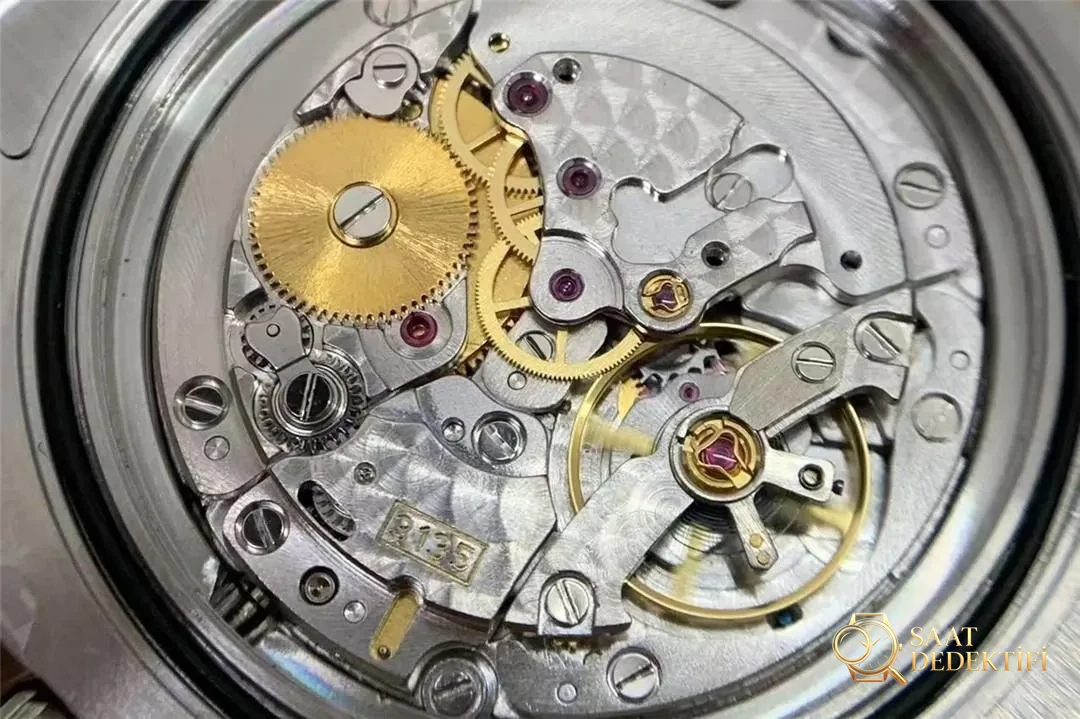
Compare your own mechanism with these values; As long as it complies with the above standards, it is normal, there is no need to change the oil or send it to service. Also, as I keep saying, the deviation can be adjusted. When shipping, I try to set the deviation on the device to under 10 seconds as much as possible (as I said before, it is normal for the deviation on the device to differ from actual use). If the deviation increases after wearing for a long time, you can have it adjusted by a watchmaker (usually XXX will take care of it, depending on local prices of course). This way, you can solve the problem quickly and avoid long service waiting periods.
Someone chimed in earlier saying these are standards from decades ago. First of all, this information can be found through sources if you research it yourself. Secondly, due to the unique nature of mechanical watches, this standard of deviation will remain valid not only decades ago, but also decades later. If you do not trust any search results and statements of authority institutions, then you are right; Please continue to live in your own world, I'm sorry to bother you. Below I include the official data of Citizen 9015:
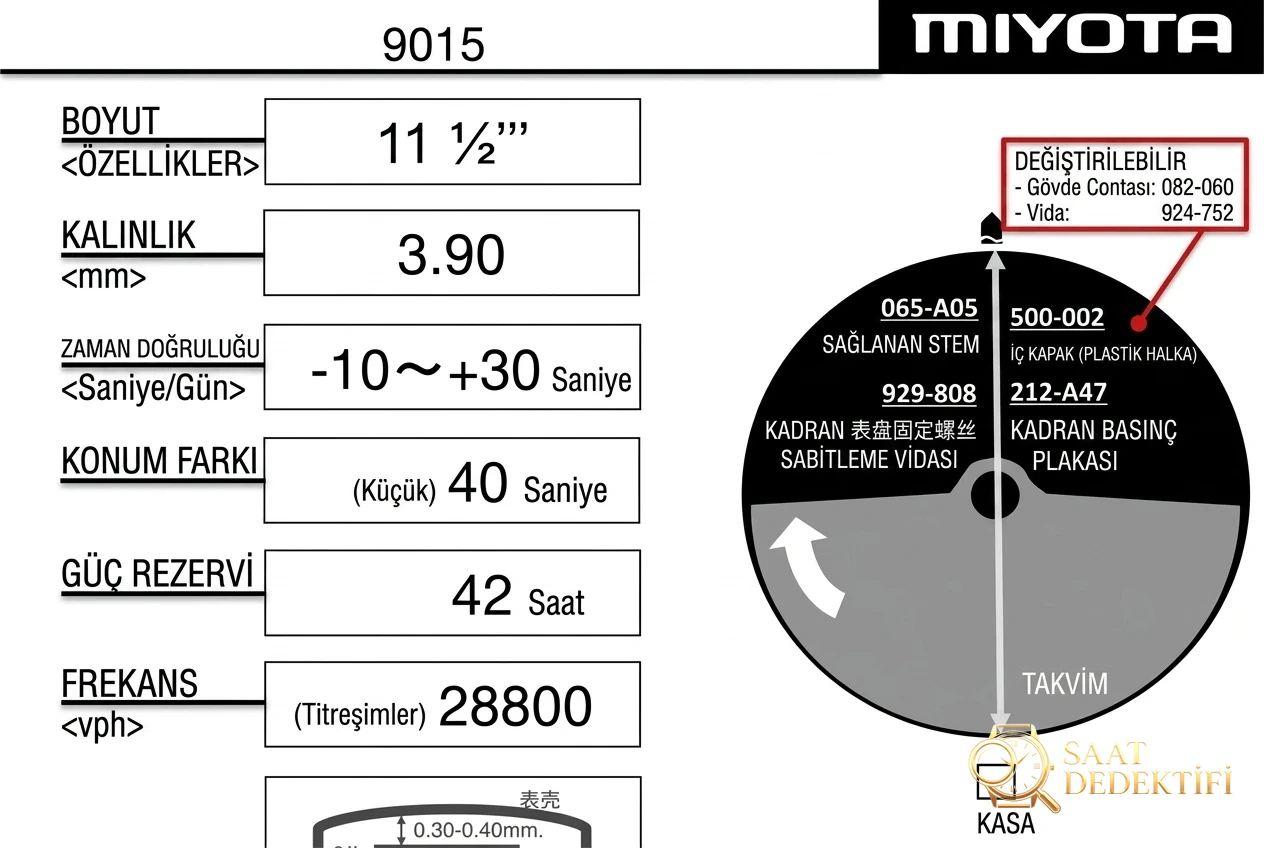
The time accuracy of this mechanism is not very good; Many customers stated that the difference in actual use after adjusting is more than Seagull, so this is normal. But this mechanism is stable; return to service rate is lower than Seagull. It is also thin; If you want to use an ultra-thin toy watch, you can't miss it.
The 9015 is only a mid-range movement; higher-end domestic movements also have a pretty good level (basically they can reach ±15 seconds; there are many customers who state that their VS movements can reach the chronometer standard, but this is a bit of a matter of luck). If you are going to use a toy watch, first choose those few models that can be purchased blindfolded; After all, the appearance and workmanship of those with good mechanisms are not bad either. If you don't necessarily have to buy a particular model, don't consider the models below just because they work. But a toy is a toy after all; If you have decided to buy a toy watch, you must accept the fact that the domestic movement is not as good as the Swiss one. After all, look at how much money you paid; It is normal that the deviation can even be kept within ±30 seconds, there is no need to send it to service, there is no need to be afraid. If you really have money and care about the details, deviation and every aspect of the watch, then you should not skimp on this money; Toy watches are not suitable for you, toy watches are only for those who want to get over this curiosity cheaply.
If you are overly obsessed with deviation, or if you are an overly obsessive person who feels compelled to count the seconds every day and see how off they are, then definitely do not buy any mechanical watch, including the Swiss; These really don't suit you. Please buy a quartz watch with a deviation of ±0.5 seconds or a smart watch with automatic time adjustment. If neither of these satisfies you, then you are either a researcher with an extremely high need for time measurement or you need to see a psychologist. Please use an electronic watch; Don't call me, I don't have such a channel, the people in the first group definitely have a channel anyway.
I hope this article was useful to you. I will share more detailed disassembly, real shot review and real-replica comparison in the future.
Saat Dedektifi Expert Score
Model: Mekanik Saatlerde Ne · Standart Seri CloneUser Rating
38 people rated · Saat Dedektifi Verified Score
Rate this model:
Conclusion & Detective Verdict
As demonstrated in our technical review of the Mekanik Saatlerde Ne model; the optical tolerances of the case, dial typography, and stable operating performance of the movement elevate this model to the pinnacle of its category. With its wrist ergonomics, premium material quality, and micron-level finishing precision, it stands as a flawless choice for collectors.
Frequently Asked Questions (FAQ)
Which mechanism is used in which model in Mechanical Watches?
In this model, the model's high stability integrated caliber or Swiss-norm Clone movement is used; Deviation tolerance is in the range of 2-5 seconds per day.
What is the case material and stainless steel quality?
Made from solid 904L/316L stainless steel with high corrosion resistance; It exactly reflects the original feeling of weight and texture.
Is there AR coating on the sapphire glass surface?
Yes. There is a colorless double-sided AR coating on the scratch-resistant sapphire crystal glass surface to prevent glare and reflection.
How is the waterproof performance?
With its seal-tested crown system, it is fully resistant to pressure up to 50-100 meters and daily water contact.
Does Saat Dedektifi have expertise assurance?
All technical controls, timegrapher measurements and case tolerances received full marks from Saat Detective expertise standards.