
Watch Evaluation Case and Dial Workmanship

Watch Evaluation Case and Dial Workmanship is a practical criterion guide that teaches you to evaluate the quality of a wristwatch not by its brand name, but by looking at the visible precision of the case surface transitions and dial printing; Each item offers a concrete point of observation that can be applied individually.
The first impression of a watch comes from the dial, but the real test of quality occurs at the transition points between the surfaces of the case. The corners where satin and polished surfaces meet are highly distinguishable even with the naked eye and are a much more reliable clue to an experienced eye than the name.
This guide explains, step by step, where an experienced observer looks when he picks up a watch, and which detail answers which question; Although each criterion may seem small on its own, when combined, it creates a clear picture of quality.
| Technical Parameter | good sign | bad sign | Market Work Ordinary Replica |
|---|---|---|---|
| Case Surface Transition | Sharp, straight dividing line | Blurry, wavy transition | — |
| Dial Print | Clear-edged text and logo | Ink bleed, blur | — |
| Date Alignment | Full number in the middle of the window | Cropped or shifted digit | — |
| Bezel Space | Equal spacing all around | Wide space on one side, narrow space on the other | — |
| Back Cover Engraving | Sharp engraving with even depth | Shallow, faint or uneven engraving | — |
| Crown Seating | Flush with case surface | Protruding or sunken stance | — |
1. Reading Case Surface Transitions
Look closely at the line where the brushed (satin) area on the lug sides of the case meets the glossy (polished) stripes on the edges; The line should be sharp and straight, not appear blurry or wavy. Check whether this line remains the same clear at all angles by shining the light on the case from different angles.
- This transition is especially neglected at the inner edges of the lug (ear); With cheap workmanship, this place is usually left uniformly brushed, because processing the inner corners requires much more time and precision than the outer surfaces.
2. Dial Print Clarity and Font
The edges of the brand logo, model text and hour indexes should remain sharp when viewed with a magnifying glass; Clouding or ink bleed is the clearest indication of a quality problem and usually indicates a problem with the print plate or ink viscosity.
- Font thickness and letter spacing should also be consistent; Irregularity cannot be overlooked, especially in small print, so when examining the dial text, attention should be paid to the symmetry of the spaces between letters.
3. Date Window Alignment and Magnifier Effect
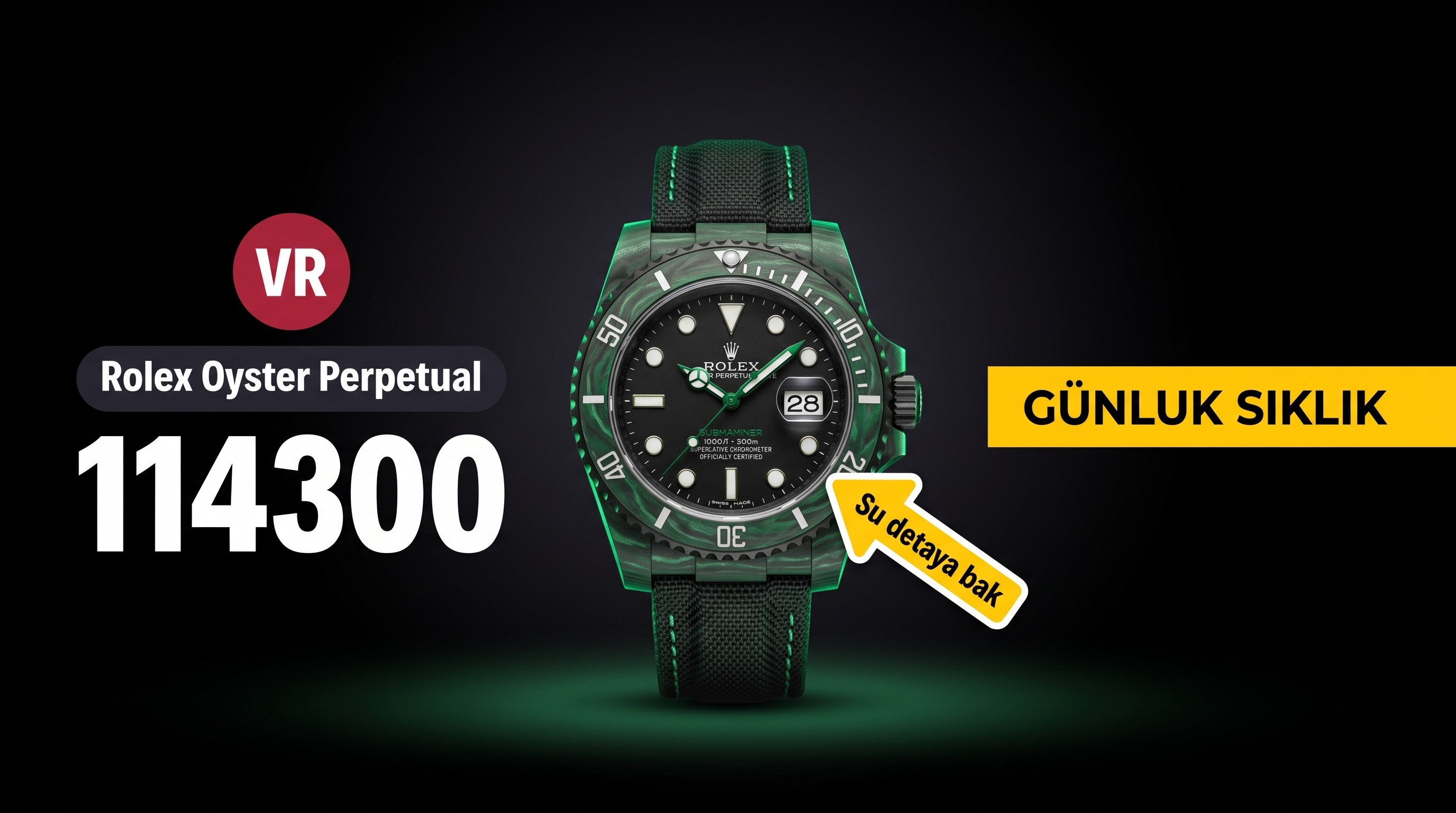
The date number should be in the middle of the window and should not be clipped from the edges. If you have a Cyclops magnifying glass, it should approximately double the figure and show it clearly; If the magnification is low or the digit is offset, this indicates poor dial-mechanism alignment.
- Whether the window frame is in the same plane as the dial: is an indirect indicator of case-dial assembly precision; If the bezel is higher or lower than the dial, the mounting tolerance should be reviewed.
4. Gap Tolerance Between Bezel and Case
The space that fits the bezel to the case should remain equal all around; A gap that is wide on one side and narrow on the other indicates a mold or assembly error and is usually most easily noticed from a top view when the watch is placed horizontally on the table.
- Another control point is that the clicking sound of rotating bezels is the same in every position. If the hardness decreases in one area, there may be wear or mounting looseness in the internal gear mechanism.
5. Case Back Engraving and Crown Seating
The depth of the text and model number engraving on the case back must be uniform all around; Shallow or faint areas are a sign of die wear and usually appear as a recurring irregularity around the cap rotation.
- When the crown is closed to the case, it must remain flush with the surface: it must not protrude or be recessed; This alignment is both aesthetic and a practical indicator of whether the gasket is seated correctly.
6. Cord Attachment Workmanship
Check for slack where the cord connects to the case lug; In a solid production, the connection pin fits snugly into the case hole and the band does not move sideways, it can be tested with a slight side pressure.
- In metal bands, the compatibility of the first link to the case profile is also a separate quality indicator; If the link is noticeably thicker or thinner than the case, this may be a sign that the case and band did not come from the same production line, damaging the overall perception of integrity.
General Evaluation
Evaluating the workmanship of the case and dial is not based on a single large detail, but on small observations that complement each other. Although each item, from the surface transition to the date alignment, from the bezel tolerance to the case back engraving, may seem small individually, when combined, they reveal the true level of craftsmanship of a watch. Saat Dedektifi Lab Score: 8.8 / 10 — applying these criteria in order, a reader can reliably gauge the craftsmanship level of any watch in a matter of minutes.
Saat Dedektifi Expert Score
Guide: Case and Dial Workmanship Guide · Saat Dedektifi Editor's ReviewUser Rating
41 people rated · Saat Dedektifi Verified Score
Rate this model:
Conclusion & Detective Verdict
Saat Dedektifi Lab Score: 8.8 / 10
Evaluating the workmanship of the case and dial is not based on a single large detail, but on small observations that complement each other. Although each item, from the surface transition to the date alignment, from the bezel tolerance to the case back engraving, may seem small individually, when combined, they reveal the true level of craftsmanship of a watch. Saat Dedektifi Lab Score: 8.8 / 10 — applying these criteria in order, a reader can reliably gauge the craftsmanship level of any watch in a matter of minutes.
Frequently Asked Questions (FAQ)
Can I see the case surface transition without a magnifying glass?
Yes, irregularities at the satin-polish border are noticeable even with the naked eye under good light.
Why is the date window such an important criterion?
Since it directly reflects the assembly precision, it is one of the most common fault points in cheap workmanship.
How does the back cover engraving betray quality?
Die wear reduces engraving depth; This may be a sign of a mold that has been used for a long time or is of poor quality.