
The Magnificent Evolution of Clock Illumination
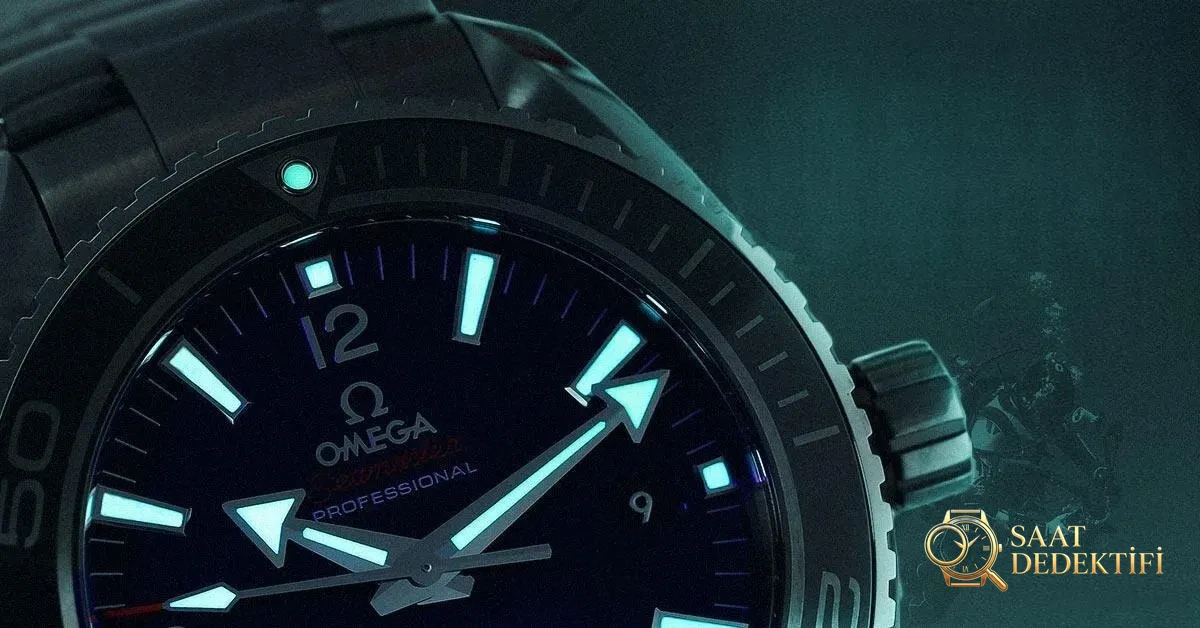
The brightness of illumination in watches has changed over the decades, with new glow-in-the-dark materials constantly being invented or developed. Let's take a look at the journey of this material in watchmaking.
The Evolution of Clock Illumination
Since the discovery of fire, humankind has always searched for new and improved ways to see things in the dark. Today we will look at the breathtaking evolution of the luminous material used in watchmaking over the many years it has been used in the industry to produce luminous watches.
How does lume work in a watch? It may work differently depending on the type of lume used, but in general all lume types have common characteristics that can be explained by understanding a little about how the science of light works. How long does the clock illumination last? This depends on which of the various types of lume are used. It also depends on how much lume is used. Some watch manufacturers apply a thin coat of lume to the watch, while others use multiple coats to make it shine brighter and last longer. What is the lume in a watch made from? It can be made from a variety of things. Over the years, the watch industry has experimented with several different types of lume. Read a little about the different types of lume used throughout the history of the watch industry. Which watch has the brightest lume? There are various luminance levels and colors used. We have prepared a table showing the difference for you.
How do illuminated clocks work? In this article, we will answer all these questions and describe the various chemical processes that watch manufacturers have used over the years to make hour and minute hands, dials, numerals, hour markers, and more glow in the dark.
A Little Science of Light
Light is a form of energy that appears in the electromagnetic field as an elementary particle known as a photon; The photon is the quantum particle of the EM field. A photon is a stable particle that has no mass or electric charge and moves at the speed of light. Photons are generally created when an electron orbiting an atom absorbs and excites a photon; When the electron calms down to a ground state, it releases a photon, which we perceive as the phenomenon we call light.
But let's not get too carried away with light or quantum science. Let's focus on how light is created and used in watchmaking and how different methods of creating photons compare to each other in the luminous material of a watch.
1908 – Radium Paint is invented
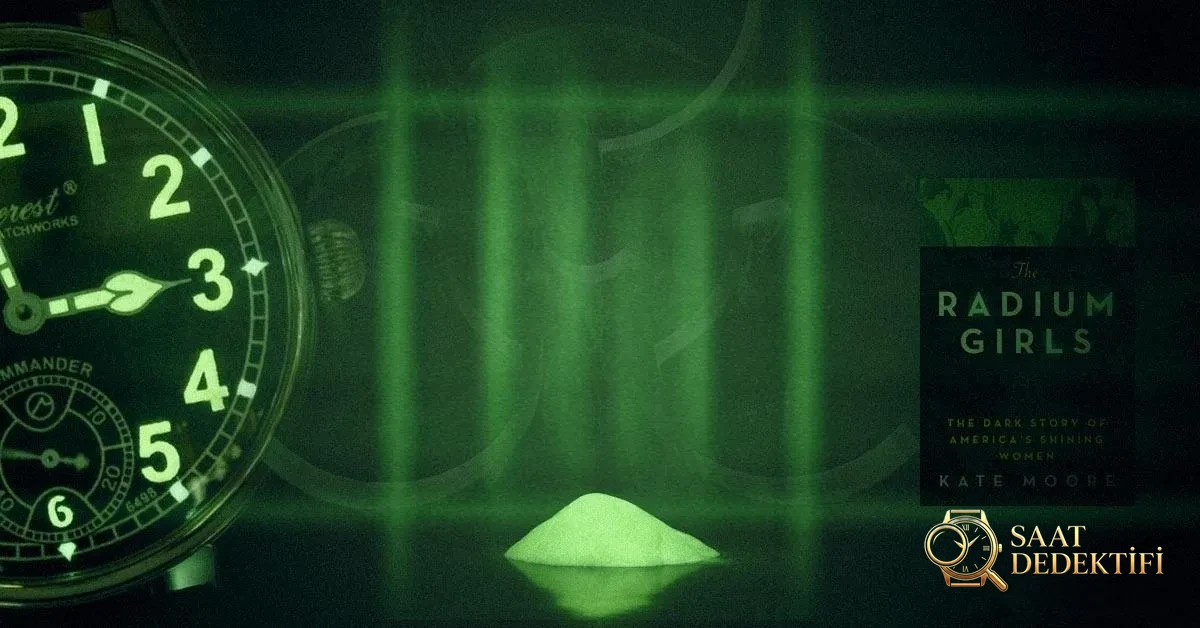
Clocks used radium as lume until the 1960s. Radium is a material that can potentially glow for over 1,600 years; this is around the material's half-life, when its illumination begins to fade. Incredible, isn't it? So what's the crux of the matter? As the name suggests, this material is radioactive!
Do radium watches still shine? Yes, but fortunately watch manufacturers have switched to safer materials. However, if you have an old piece with a radium dial and want to check whether it actually uses radium, use a Geiger counter; If it's alarming, it's real.
According to BFS* (German Federal Office for Radiation Protection), the reason why Radium (Ra-226) was not used was not because of the risks it posed to the person wearing the watch, but because of the risk it posed to the watchmakers working on the watch.
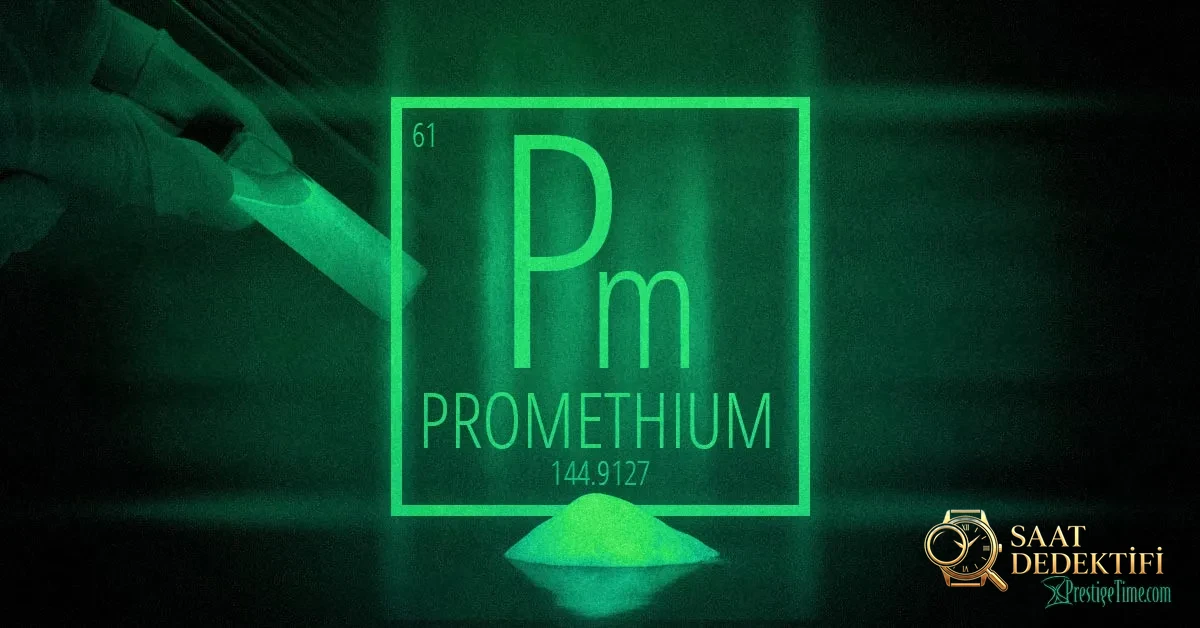
Promethium (Pm-147)
Promethium was used for a time as a less harmful radioactive alternative to Radium. Its risk is lower than radium because it emits only beta particles. The disadvantage of promethium is that its half-life is just over two and a half years; Compared to radium's half-life of over 1,600 years, it's a spit into the ocean.
Tritium (H-3)
This is a material used until the mid-1990s and, like Promethium, is a beta emitter and a safer alternative to radium. However, it is a low energy beta emitter and has a pretty good half-life of 12.3 years compared to Promethium which is only about 2.6 years.
They converted this radioactive isotope of hydrogen into a type of dye, and the material was potentially problematic in this format. Until the mid-90s, watches using Tritium dye-based illumination usually had plastic case backs. Tritium had a property of spreading and could seep into the dial, glass and case back, and from there reach the skin of the person wearing the watch.
Is Tritium still used in watches? Today in watchmaking, Tritium is known as GTLS (gaseous tritium light sources) and is stored safely in tiny narrow glass tubes that are less permeable than the paint on a dial protected only by watch glass. It is then further protected by sapphire glass and case backs, now known as GTLS glass tubes. Some watches using GTLS are prohibited in countries such as Germany, where there is a legal limit of 1 GBq. Some clocks can reach almost twice this limit, up to 15 GTLS and a Tritium activity of up to 1.9 GBq. Tritium tubes are famously used in Ball watches, which are known for their highly visible dials in low light conditions.
Over the years, many watch manufacturers have used tritium, including the most well-known luxury watch brand, Rolex. When did Rolex stop using tritium? In 1998, when the use of tritium dye was banned. Since then they have been using Luminova instead.
LumiNova
When was LumiNova invented?
In 1941, a Japanese man named Kenzo Nemoto opened a business selling luminous paint. During World War II, he was contracted by his country's army to paint indicators on aircraft. When the war finally ended, he was not as busy painting for the army and had to look for more opportunities. After the war, he earned his living mainly by painting the hour markers and hour and minute hands of residential clocks, and then turned to clocks.
Shortly after the bombing of Hiroshima and Nagasaki in 1945, at a time when the Japanese were more cautious about the dangers of radioactive materials, Nemoto began thinking about how he could develop a new non-radioactive enlightenment material. Kenzo created a new phosphorescent material and founded Nemoto & Co. in 1962. The company called invented a new form of enlightenment in 1993.
Unlike its predecessors, this magnificent new material is a non-hazardous phosphor that does not deteriorate over the life of the watch, is temperature resistant and unaffected by environmental influences. In 1998, Nemoto was joined by RC-Tritec AG* and they named the arm LumiNova AG Switzerland, which would soon supply the watch industry. Kenzo Nemoto was smart enough to patent the material, which allowed him to license it to watch manufacturers looking for the latest and greatest in glow-in-the-dark materials.
What is LumiNova made of?
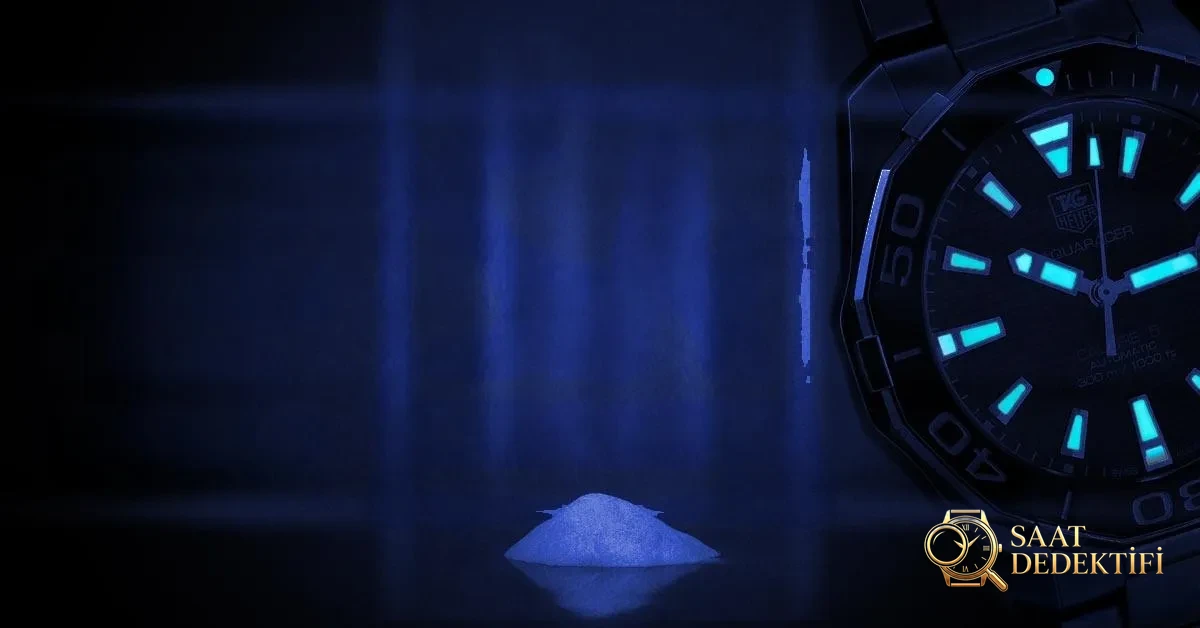
This material was known as strontium aluminate and was not a radioluminescent material like Radium, Promethium or Tritium phosphorescent paint, which use zinc sulfide. LumiNova was about 10 times brighter than conventional illumination and had color variations from bright blue to bright green. The blue hue was known to shine the longest, but the green hue was the brightest.
This new material had to be combined with a chemical element called europium to glow, and unlike radioluminescent materials, which are always in a glowing state, LumiNova was "charged" by exposure to light, whether sunlight or artificial light, providing excellent night visibility.
What is the difference between LumiNova and Super-LumiNova?
Super-LumiNova is the registered name under which LumiNova is distributed by LumiNova AG Switzerland. If LumiNova has the word Super in front of it, it means it is entirely produced in Switzerland. A Swiss company called RC Tritec AG was founded in 1993 and holds the license and rights to manufacture and distribute LumiNova under the registered name Super-LumiNova.
But LumiNova didn't stop there. Seiko has also licensed the material for its LumiBrite watches, and the famous Timex Indiglo is another example of the successful licensing and rebranding of this product.
Super-LumiNova is available in a variety of shades and gloss intensities. Super-LumiNova also comes in several different grades: from Standard Grade, through Grade A, and finally Grade X1, the highest grade of Super-LumiNova; the latter has a readability according to ISO 3157, which increases the readability by 1.6 times in the new Swiss Super-LumiNova.
How does Super-LumiNova work?
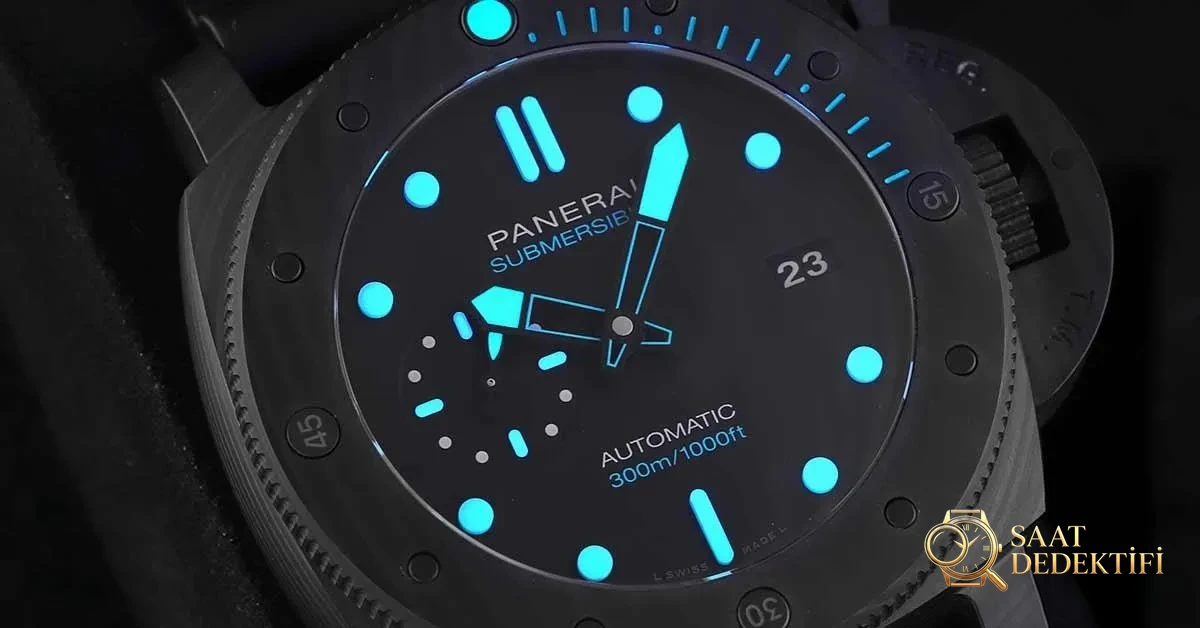
According to RC Tritec, it works like a light storage battery. For Super-LumiNova to glow, it must first be "charged" by exposure to light. Although natural light will also charge the illumination, it has been reported that sunlight provides the best effect. When light comes into contact with the phosphorescent material, it excites the electrons and they begin to charge rapidly.
This creates a flare.
What are the different colors of Super-LumiNova?
There are many shades that offer different intensities of shine.
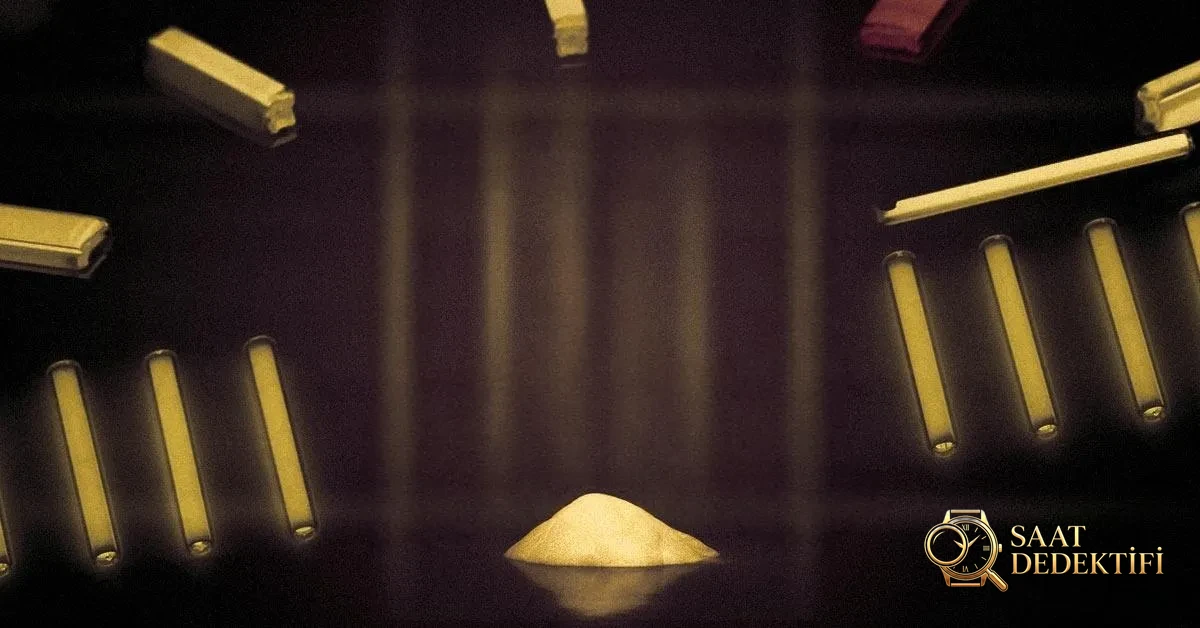
The brightest is C3, with a cream tint. We will compare the brightness of other colors with respect to C3, whose brightness is considered 100% for this comparison. BGW9 is white and has about 95% brightness compared to C3. C5 has a mint green tint and 89% brightness compared to C3. Natural has a natural sunlight tone and 87% brightness compared to C3. Light blue has 87% brightness compared to C3. C7 has a teal tint and 84% brightness compared to C3. C9 has a pale turquoise hue and 83% brightness compared to C3. Light green has an 82% hue compared to C3. Dark green has 77% brightness compared to C3. Light yellow has 72% brightness compared to C3. Dark blue has 60% brightness compared to C3. Light orange has 54% brightness compared to C3. Dark yellow has 50% brightness compared to C3. Light red has 48% brightness compared to C3. C3 has a dense off-white tone and 43% brightness compared to C3. C1 is white and has 31% brightness compared to C3. Dark orange has 27% brightness compared to C3. Dark red has 22% brightness compared to C3.
NAME
COLOR
brightness
C3
cream
100%
BGW9
White
95%
C5
Mint Green
89%
natural
Natural Sunlight
87%
Light Blue
Light Blue
87%
C7
Teal
84%
C9
Pale Turquoise
83%
Light Green
Light Green
82%
Dark Green
Dark Green
77%
Light Yellow
Light Yellow
72%
Dark Blue
Dark Blue
60%
Light Orange
Light Orange
54%
Dark Yellow
Dark Yellow
50%
Light Red
Light Red
48%
C3 Dense
Off White
43%
C1
White
31%
Dark Orange
Dark Orange
27%
Dark Red
Dark Red
22%
Super-LumiNova VS Chromalight
Chromalight is a licensed rebrand of LumiNova, just like Seiko LumiBrite and Timex Indiglo, and is essentially the LumiNova C9. Since LumiNova holds the patent on the material and the Chromalight is made from strontium aluminate, it's actually all Rolex's powerful marketing department that has so successfully branded it as something else. However, it is possible that Rolex, like other watch manufacturers, applied the substance differently to maximize illumination; for example, applying a bright white base under the highlighting material. Also, the more coats of lume you apply, the brighter it shines. Some brands, like Lum-Tec, apply up to 6 to 8x lume to maximize visibility in low light conditions.
Is Rolex Chromalight more visible than Super-LumiNova?
This question is often confusing since it is already made of Super-LumiNova. To clarify, the Super-LumiNova C9 hue from which the Rolex Chromalight is made is only about 83% as bright as Super-LumiNova C3. It has a pale turquoise hue which looks nice but is not the brightest. Green-toned illumination is more visible to the naked eye than more bluish tones such as C9.
You liked this article and think others will too? Share on your social media and feel free to follow us on Facebook and Instagram!
Browse Hours
Saat Dedektifi Expert Score
Model: Saat Aydinlanmasinin Muhtesem · Standart Seri CloneUser Rating
27 people rated · Saat Dedektifi Verified Score
Rate this model:
Conclusion & Detective Verdict
As demonstrated in our technical review of the Saat Aydinlanmasinin Muhtesem model; the optical tolerances of the case, dial typography, and stable operating performance of the movement elevate this model to the pinnacle of its category. With its wrist ergonomics, premium material quality, and micron-level finishing precision, it stands as a flawless choice for collectors.
Frequently Asked Questions (FAQ)
Which mechanism is used in the Magnificent Model of Watch Enlightenment?
In this model, the model's high stability integrated caliber or Swiss-norm Clone movement is used; Deviation tolerance is in the range of 2-5 seconds per day.
What is the case material and stainless steel quality?
Made from solid 904L/316L stainless steel with high corrosion resistance; It exactly reflects the original feeling of weight and texture.
Is there AR coating on the sapphire glass surface?
Yes. There is a colorless double-sided AR coating on the scratch-resistant sapphire crystal glass surface to prevent glare and reflection.
How is the waterproof performance?
With its seal-tested crown system, it is fully resistant to pressure up to 50-100 meters and daily water contact.
Does Saat Dedektifi have expertise assurance?
All technical controls, timegrapher measurements and case tolerances received full marks from Saat Detective expertise standards.