Do you know what the stamps on the case back mean?
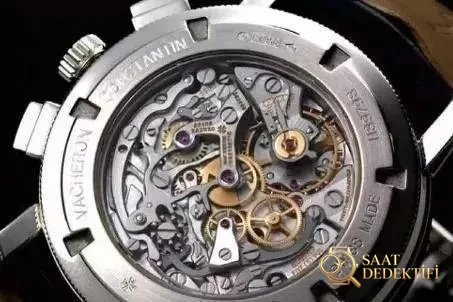
Hello friends, welcome to Watch World. It is no longer surprising that high-end watches use some precious metals; Otherwise, why would a tiny watch be so valuable most of the time? There are strict rules in the world of watchmaking to distinguish these precious metals from each other. According to records, the French were the first to mark precious metals. Precious metals are not only rare, but the purity used in each watch can also vary; That's why some stamps are needed to secure the value of the watch itself. Of course, these stamps can show the place and period of production of the watch as well as its value. There are many different symbols and versions used to distinguish precious metal hallmarks around the world; Some are in the form of text and some are in the form of animal figures.
Switzerland established the first official metal inspection body in 1881 and standardized the gold purity mark. Before this, all hallmarks were made separately by each watch factory and there was no common standard. Today, precious metal hallmarks can generally be divided into two parts: they are engraved on places such as the inside and outside of the case back and the side surface of the lugs. The size of the stamps is generally kept within 1 square millimeter; This prevents it from getting in the way of the actual design. Now let's take a look at what the precious metal stamps on watches are! In Swiss-made precious metals, the head of Switzerland's national dog, Saint Bernard, is used as the only valid symbol.
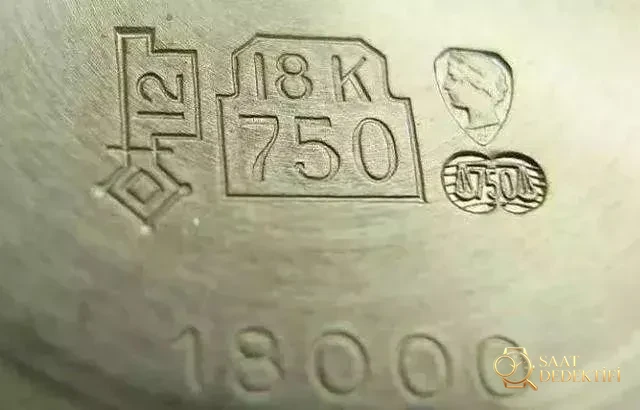
The most common precious metal is undoubtedly 18 carat gold; It is often denoted by '18K' or '750', and two overlapping circles containing a scale are also used. 24 carat indicates pure gold. Before 1995, the queen's head sign was used. The most common hallmarks for platinum, or white gold, are 'Pt950', the hallmark behind the head of a Saint Bernard dog, and the figure of scales displayed within a diamond with the number 950.
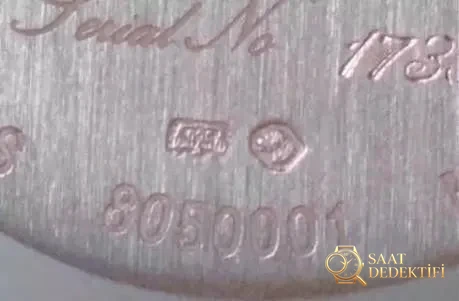
Before August 1995, the phrase PT, 0.950 purity and the figure of an antelope head representing platinum were used; or a scale figure with the number 950 engraved in a diamond slice would be added. However, later the antelope head was replaced by the Saint Bernard dog head, just like the others.
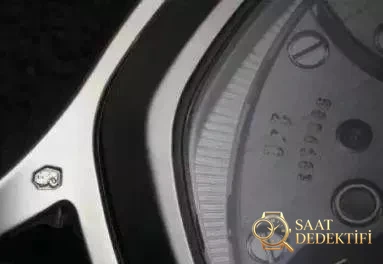
Gold stamp on ears
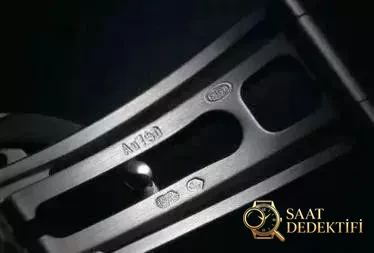
Gold stamp on the buckle.
Saat Dedektifi Expert Score
Model: Kasa Arkasindaki Damgalarin · Standart Seri CloneUser Rating
31 people rated · Saat Dedektifi Verified Score
Rate this model:
Conclusion & Detective Verdict
As demonstrated in our technical review of the Kasa Arkasindaki Damgalarin model; the optical tolerances of the case, dial typography, and stable operating performance of the movement elevate this model to the pinnacle of its category. With its wrist ergonomics, premium material quality, and micron-level finishing precision, it stands as a flawless choice for collectors.
Frequently Asked Questions (FAQ)
Which mechanism is used in the Case Back Stamps model?
In this model, the model's high stability integrated caliber or Swiss-norm Clone movement is used; Deviation tolerance is in the range of 2-5 seconds per day.
What is the case material and stainless steel quality?
Made from solid 904L/316L stainless steel with high corrosion resistance; It exactly reflects the original feeling of weight and texture.
Is there AR coating on the sapphire glass surface?
Yes. There is a colorless double-sided AR coating on the scratch-resistant sapphire crystal glass surface to prevent glare and reflection.
How is the waterproof performance?
With its seal-tested crown system, it is fully resistant to pressure up to 50-100 meters and daily water contact.
Does Saat Dedektifi have expertise assurance?
All technical controls, timegrapher measurements and case tolerances received full marks from Saat Detective expertise standards.